
Banking & lending
Document fraud detection for banking and lending
Flag edited bank statements, pay stubs, tax returns and business documents in personal, auto and small-business loan files.
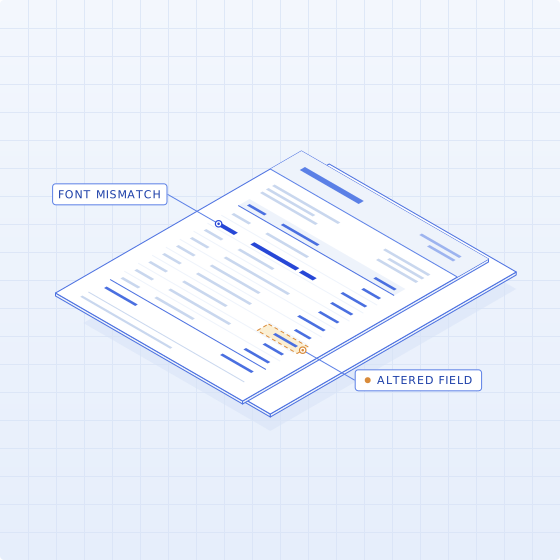
What we check
Every document in the application. Checked before you decide.
01
Fake bank statement detection
Edited balances and deposits. Font mismatches.
02
Fake pay stub detection
Changed income, dates and employers.
03
Tax returns and W-2s
Edited wages and figures.
04
Business documents
Edited business statements, invoices and registrations.
05
IDs
Edited photos and details.
06
Cross-document checks
Income compared across pay stubs, tax returns and deposits.
In developmentFast decisions
Speed without skipping the check.
Personal, auto and small-business loans close in days. Each file is checked at upload, so the fast decision still rests on documents someone looked at.
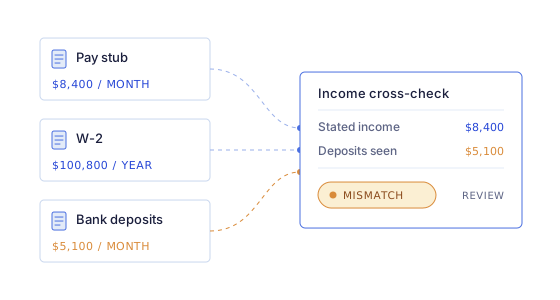
See why a file was flagged.
Your underwriter or fraud team decides.
01
Add the file
Statements, pay stubs, tax returns, business documents and IDs.
02
Check every page
Edits, AI generation and metadata.
03
Review the evidence
Each finding, where it is, how strong.
FAQ
What lenders ask us.
Which loan documents does Trustable check?
Bank statements, pay stubs, W-2s and tax returns, business bank statements, invoices and registration documents, and IDs. Each is checked for edited text, font and layout mismatches, rebuilt templates, metadata that conflicts with the claimed source and totals that don’t add up, with every finding marked on the page.
Can it check small-business documents?
Yes. Business bank statements, invoices and registration documents get the same checks as personal documents: edited figures, mismatched fonts, rebuilt templates and metadata gaps. Comparing revenue across statements and invoices in one application is in development.
Does Trustable work for auto and personal loans?
Yes. The documents are the same as in a mortgage file, and so are the checks. Files are usually fewer and decisions faster, which is why each document is checked at upload rather than at the end of the process. Mortgage and HELOC files have their own page.
How do files reach Trustable?
Through the API or the Trustable web app. Send a statement, pay stub, tax return, business document or ID and get back the findings, where they are and how strong each one is, for your underwriter or fraud team. Routing results into your loan origination workflow is in development.
Does a flag mean the applicant committed fraud?
No. A flag means a document needs a closer look, not that anyone committed fraud. Files are edited for innocent reasons too, such as cropping a scan or removing a password. Trustable shows what it found, where, and how strong the signal is; your underwriter decides whether to ask for the original or move on.
Banking & lending
See it on a loan file.
We demo on a sample file. Yours only after we agree on data handling.
Book a demoGuides: How to spot a fake bank statement · HELOC document fraud